

Waste Management Services in Nigeria: What to Look For
Waste management services in Nigeria face unprecedented pressure, as facilities struggle to meet environmental standards while managing the increasing volume of waste.
Nigeria generates approximately 32 million tons of solid waste per year, with only about 20-30 percent of it properly managed. This statistic represents more than numbers on paper. It translates to environmental violations, operational shutdowns, and financial losses that drain millions of Naira from company budgets annually. The equipment driving these waste management services determines whether operations succeed or fail.
At Chuzeke Nigeria Limited, we’ve spent years engineering waste management equipment specifically for Nigerian conditions. Our Port Harcourt facility fabricates incinerators, thermal desorption units, pyrolysis plants, and compaction systems that power compliant waste operations across the country. We understand what works in Nigeria’s climate, regulatory environment, and operational realities because we build the systems that handle them daily.
Choosing the right waste management services provider impacts your environmental compliance, operational efficiency, and financial performance. The decision impacts your bottom line, reputation, and ability to operate legally in Nigeria’s increasingly strict regulatory environment.
This detailed article breaks down exactly what to look for when evaluating waste management services in Nigeria. You’ll learn the specific criteria that separate competent providers from those who create more problems than they solve. More importantly, you’ll understand why equipment quality and local fabrication expertise matter when selecting partners who can deliver reliable, compliant waste management solutions.
Why Proper Waste Management Equipment Selection Matters in Nigeria
The waste management services terrain in Nigeria presents unique challenges that standard imported solutions cannot address. Understanding these challenges helps you make informed decisions about service providers and equipment suppliers.
The True Cost of Wrong Waste Equipment Choices
Waste equipment failures cost Nigerian operations millions of Naira per hour in downtime. When a waste processing system breaks down, your entire facility’s operations can grind to a halt. Production stops. Waste accumulates. Regulatory inspectors take notice.
Generic waste management equipment fails under Nigerian conditions for specific reasons. High ambient temperatures stress standard steel components beyond their design specifications. Humidity accelerates corrosion in systems not engineered for tropical climates. Continuous operation demands exceed what many imported systems can deliver.
The financial impact extends beyond repair costs. Failed inspections result in fines. Delayed projects drain budgets. Substandard fabrication creates safety risks that expose your organization to liability. Most critically, regulatory violations can force complete operational shutdowns while you scramble to find compliant solutions.
Nigeria’s Waste Management Reality
Around 70% of the waste generated is plastic waste, while another important component comes from electronic devices. These waste streams require specialized handling that general waste collection services cannot provide.
Healthcare facilities generate waste at rates of 0.57 kg/bed/day for Nigeria, while oil field operations produce drilling waste containing hazardous substances requiring treatment before disposal. Each waste category demands specific equipment and handling protocols.
State-level initiatives like Lagos Waste Management Authority (LAWMA), established in 1977 and restructured in 2006, now consult on waste management matters to other states and African countries. This demonstrates growing recognition of professional waste management’s importance across Nigeria.
Essential Criteria When Evaluating Waste Management Service Providers
Selecting a waste management partner requires evaluating multiple factors that impact your operations. Here’s what matters most:
Regulatory Compliance and Certifications
NESREA (National Environmental Standards and Regulations Enforcement Agency) enforces environmental laws, guidelines, policies, standards, and regulations in Nigeria, as well as enforcing compliance with international environmental agreements. Any waste management services provider you consider must demonstrate current NESREA compliance.
The National Environment Protection (Pollution Abatement in Industries and Facilities producing Waste) Regulations prohibit the release of hazardous substances into air, land, or water beyond approved limits. Your provider must have systems and protocols that ensure compliance with these limits.
Equipment Quality and Technical Capabilities
The waste management equipment your provider uses directly impacts service quality and reliability. Look for providers who maintain modern, well-maintained equipment specifically designed for waste processing.
Critical waste equipment categories include:
Incinerators: Medical facilities require incinerators that achieve complete combustion while meeting emission standards. Lagos healthcare facilities employ LAWMA services, which use hydroclave technology for waste treatment, demonstrating the level of technical capability required.
Thermal Desorption Units: Oil field operations need thermal desorption systems that safely separate hydrocarbons from contaminated soil. These systems must operate continuously in field conditions.
Compactors and Collection Equipment: Modern specialized collection equipment, such as Roll-On-Roll-Off and Skip-Bin systems, handles construction, demolition, and specialized waste.
Pyrolysis Plants: Waste-to-energy operations require pyrolysis systems that convert plastic waste, tires, and biomass into fuel oil and carbon black.
Experience with Nigerian Operating Conditions
Nigerian industrial environments destroy equipment not designed for local conditions. Your waste management provider must demonstrate specific experience operating in Nigeria’s climate and regulatory environment.
Look for providers with facilities in Nigeria, not just foreign companies with local agents. Local facilities mean faster response times, readily available spare parts, and engineers who understand regional challenges.
Ask about their experience with your specific waste streams. Healthcare waste management differs fundamentally from oil field waste handling. Industrial waste from metal fabrication requires different approaches than municipal solid waste.
Service Coverage and Response Times
Waste accumulation cannot wait. When your facility generates waste, collection and processing must happen on schedule. Delayed service creates operational bottlenecks, compliance risks, and safety hazards.
Evaluate providers based on their service territory. Can they reliably reach your facility? Do they maintain backup systems if primary equipment fails? What’s their guaranteed response time for emergencies?
Specialized Waste Management Solutions You Need to Know
Different industries generate distinct waste streams requiring specialized handling approaches. Understanding these categories helps you identify providers with relevant expertise.
Solid Waste Processing Equipment
Municipal and industrial solid waste requires mechanical processing before final disposal. Waste processing equipment includes shredders, separators, and compaction systems that reduce volume and prepare materials for recycling or disposal.
Rotary kiln incinerators handle solid waste that cannot be recycled. These systems achieve the high temperatures needed for the complete combustion of organic materials. Properly designed kilns include emission control systems that capture particulates and gases.
In-vessel composters accelerate organic waste decomposition in controlled environments. These sealed systems manage temperature, moisture, and aeration to produce compost from food waste, agricultural residues, and other biodegradable materials.
Healthcare and Medical Waste Systems
Healthcare facilities in certain states, such as Lagos, mix municipal and medical waste in on-site storage, creating improper storage and identification challenges. Proper medical waste management requires segregation at source, secure storage, and appropriate treatment before disposal.
NESREA’s National Environmental (Healthcare Waste Control) Regulations prohibit mixing non-hazardous items with hazardous items and make it illegal to burn healthcare waste without proper treatment equipment.
Medical waste incinerators must achieve temperatures that destroy pathogens while controlling emissions. Alternative technologies like autoclaves and chemical treatment systems provide non-incineration options for certain waste categories.
Oil Field Waste Treatment
Nigeria produces about 3,900 billion barrels of drill cuttings in a typical 4,054-meter onshore drilling operation. This volume demands specialized treatment capacity that conventional waste services cannot provide.
Oil field services include solids control, waste management, fluids and chemical supply, well completion, oil spill cleanup, and equipment maintenance. Drilling waste contains hydrocarbons, heavy metals, and drilling fluid additives requiring oil field waste treatment solutions before disposal.
Thermal desorption units heat contaminated soil to vaporize hydrocarbons without combustion. The vaporized materials are captured and condensed, separating them from clean soil. This process achieves cleanup standards for contaminated sites.
Solidification/stabilization technologies bind contaminants within a solid matrix, reducing their mobility and toxicity. These systems process oily sludge, tank bottoms, and other liquid wastes into stable solids suitable for landfilling.
Industrial and Hazardous Waste Management
Federal Solid and Hazardous Waste Management Regulations make it mandatory for industries to identify solid hazardous wastes dangerous to public health and the environment, and research their recycling possibility.
Manufacturing operations generate waste oils, spent solvents, metal-bearing sludges, and chemical residues. Each category requires specific handling, treatment, and disposal protocols.
Mercury recovery systems extract mercury from industrial waste streams and contaminated equipment. Closed-loop extraction systems achieve 99%+ recovery efficiency while maintaining environmental containment, meeting strict standards for mercury management.
Red Flags When Choosing Waste Management Services Partners
Certain warning signs indicate providers who cannot deliver reliable, compliant service. Recognizing these red flags protects your operations from costly mistakes.
Warning Signs of Substandard Providers
Missing or expired permits signal serious problems. Any provider without current NESREA certifications cannot legally provide waste management services. Don’t accept promises about “permits in process.”
Vague answers about equipment capabilities indicate providers who lack the necessary technical knowledge. Competent providers explain exactly how their systems work and provide performance specifications.
Unusually low pricing compared to market rates suggests corners being cut. Proper waste management requires significant equipment investment and operating costs. Providers who undercut market rates cannot maintain quality standards.
Lack of local facilities or Nigerian presence creates service reliability problems. Providers relying entirely on imported equipment and foreign technicians cannot respond quickly to breakdowns or emergencies.
Questions Every Facility Manager Should Ask
Before engaging any waste management services provider, get clear answers to these questions:
Describe your equipment maintenance schedule. How often do you service equipment? Who performs maintenance? What’s your backup plan when equipment fails?
Provide references from facilities similar to ours. Contact these references and ask about service reliability, regulatory compliance, and problem resolution.
Explain your staff training protocols. How do you train operators? What safety procedures do you follow? What emergency response capabilities do you maintain?
Show us your waste tracking and reporting systems. How do you document waste handling? What records do you provide for regulatory compliance?
How Chuzeke Nigeria Limited Sets the Standard
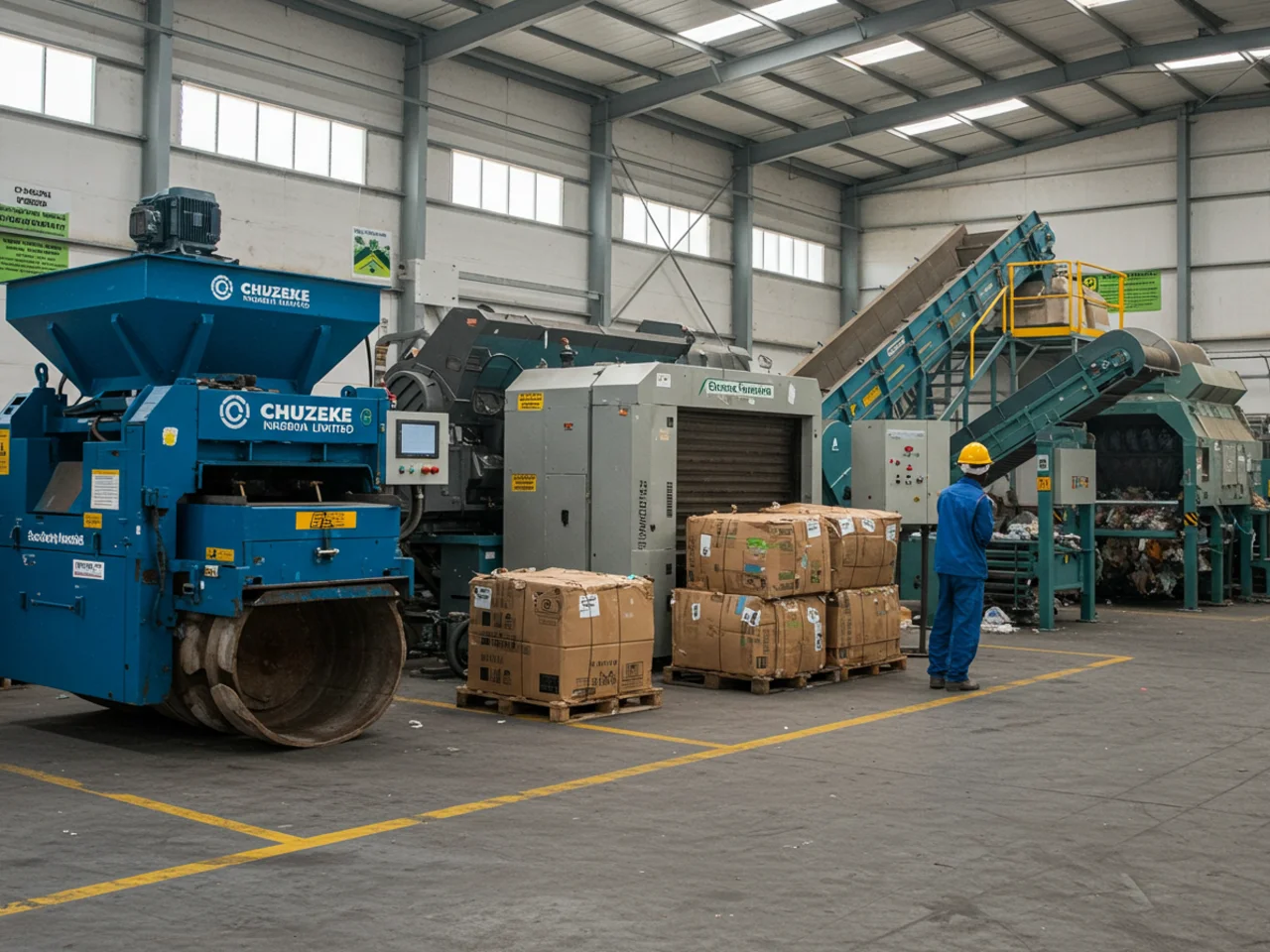
Chuzeke Nigeria Limited combines precision engineering with deep knowledge of Nigerian industrial challenges. Our Port Harcourt facility fabricates waste management equipment specifically designed for Nigerian operating conditions.
Our Waste Equipment Manufacturing Advantage
We manufacture complete waste management systems, including:
Rotary Kiln Incinerators: Multi-chamber systems that achieve complete combustion while meeting NESREA emission standards. Our kilns process solid waste, medical waste, and industrial waste with proven reliability.
Pyrolysis Plants: Continuous-feed systems that convert plastic waste and biomass into fuel oil and char. These units operate 24/7 in field conditions, delivering consistent output.
Thermal Desorption Units: Custom-engineered systems for oil field waste treatment. Our TDUs handle contaminated soil, drill cuttings, and oily sludge, achieving regulatory cleanup standards.
Mercury Recovery Systems: Closed-loop extraction systems achieving 99%+ recovery efficiency with complete environmental containment, suitable for industrial mercury recovery and environmental remediation.
Waste Compactors: Hydraulic compaction systems achieving 10:1 volume reduction with force ratings from 50-200 tons. Built for continuous operation, handling high-volume requirements.
In-Vessel Composters: Sealed composting systems that accelerate organic waste decomposition while controlling odors and maintaining optimal processing conditions.
Built for Nigerian Conditions
Every system we fabricate meets NESREA standards and international safety protocols, including ASME and ISO specifications. Our equipment operates reliably in Nigeria’s heat, humidity, and continuous operation demands.
We understand Nigerian operating realities because we work within them daily. Our engineering team considers local power stability, available fuel types, operator skill levels, and maintenance resource availability when designing systems.
All equipment includes comprehensive operator training. We don’t just deliver systems and walk away. Our training programs ensure your team knows how to operate, maintain, and troubleshoot every piece of equipment.
Taking the Next Step: Getting Started with Professional Waste Management Services
Selecting waste management services impacts your environmental compliance, operational efficiency, and financial performance. The decision requires careful evaluation of providers’ capabilities, experience, and equipment quality.
Start by documenting your waste streams. What types of waste does your facility generate? What volumes do you produce daily, weekly, and annually? What regulatory requirements apply to your operations?
Next, evaluate potential providers against the criteria outlined in this article. Request site visits to see their equipment and facilities. Ask for case studies from similar operations. Verify their regulatory compliance status.
Remember that the lowest price rarely delivers the best value. Quality waste management equipment and services cost more upfront but deliver lower total cost through reliable operation, regulatory compliance, and minimal downtime.
Chuzeke Nigeria Limited provides complete waste management solutions from equipment design through installation, training, and ongoing support. Our systems are engineered for Nigerian conditions and built to deliver years of reliable service.
Contact us for a comprehensive evaluation of your waste management needs. We’ll assess your operations, recommend appropriate equipment, and provide detailed specifications and pricing. Let’s discuss how proper waste management systems protect your operations and ensure regulatory compliance.


Partner with Nigeria's Leading Waste Equipment Fabrication company
Stop dealing with equipment failures and project delays. Get reliable waste management and oil field equipment engineered for Nigerian industrial conditions. We’re ready to build.