

Waste Management Equipment Maintenance: Proven Methods for Maximum Equipment Availability
Waste management equipment maintenance is one of the most overlooked responsibilities across Nigerian industrial operations. Whether you manage a recycling facility, a hospital, an oil field, or a construction site, your equipment handles heavy daily loads under punishing conditions. When a machine stops unexpectedly, work halts, costs jump, and regulatory deadlines get missed.
A structured maintenance programme changes that picture entirely. Here is how to build one.
Why Waste Management Equipment Maintenance Matters for Nigerian Industrial Operations
Every piece of waste management equipment, from rotary kiln incinerators to compactors and thermal desorption units, runs under constant stress. Nigeria’s heat, humidity, and continuous operation cycles wear components faster than in many other environments. An unplanned machine stoppage in a Nigerian facility can cost tens of thousands of Naira per hour in lost production, emergency repair labour, and compliance penalties under NESREA regulations.
Planned maintenance cuts that risk. Industry data show that reactive repairs cost between four and ten times as much as scheduled servicing. Getting ahead of problems protects your investment in quality-fabricated equipment and keeps your facility operating to standard.
Three Waste Management Equipment Maintenance Approaches Waste Operations Use
Understanding your options helps you build a programme that matches your budget, team size, and equipment type.
Reactive Maintenance (Run to Failure)
Reactive maintenance waits for a breakdown before acting. This suits only low-cost, non-critical parts where replacement is cheaper than scheduling. For core waste management machinery, this approach is expensive and often dangerous. An unexpected failure on a medical waste incinerator or a thermal desorption unit carries serious safety and environmental risks.
Preventive Maintenance
Preventive maintenance runs on a fixed schedule — daily checks, weekly lubrication, monthly inspections, and annual overhauls. This is the foundation of any sound equipment maintenance programme. It reduces unplanned stoppages, extends equipment life, and meets manufacturer warranty requirements. The ISO 55000 asset management standard recognises scheduled preventive servicing as the baseline for responsible industrial asset management.
Condition-Based Monitoring
Condition-based monitoring uses sensor data, vibration readings, and temperature tracking to detect problems before they cause failure. Larger facilities use Computerised Maintenance Management Systems (CMMS) to automate alerts and track maintenance history. Smaller operations can start with a simple signed inspection checklist reviewed weekly; the principle is the same.
Building a Preventive Maintenance Schedule for Waste Equipment
Your schedule should start with the manufacturer’s recommended service intervals, then adjust them based on actual operating conditions. A thermal desorption unit running 16 hours a day in the Niger Delta heat needs more frequent attention than one running six hours a day in a controlled environment.
Use this framework as your starting point:
- Daily: Visual inspection of all accessible components, lubrication points check, temperature and pressure readings, safety device function test
- Weekly: Filter cleaning, hydraulic fluid level check, belt and chain tension check, electrical connection inspection
- Monthly: Full lubrication service, wear-part inspection, calibration checks on metering and control systems
- Quarterly / Annual: Major overhaul, bearing replacement where due, full system performance test, refractory inspection on thermal equipment
Log every task completed. Record the technician’s name, the date, parts used, and findings. This record protects your facility during regulatory audits and helps identify patterns in equipment wear before they become failures.
Core Maintenance Tasks for Waste Management Machinery
Different equipment types carry different maintenance demands. Here are the main tasks for the machinery that Chuzeke Nigeria Limited designs and fabricates for Nigerian industries.
Incinerators, Gasifiers, and Pyrolysis Units
Thermal systems run at extreme temperatures. Core maintenance tasks cover refractory lining inspection, burner cleaning, exhaust system checks, and door seal replacement. Any sign of heat loss or unexpected emission colour calls for immediate investigation. When servicing combustion systems, follow NESREA air quality guidelines for emissions compliance.
Compactors, Balers, and Shredders
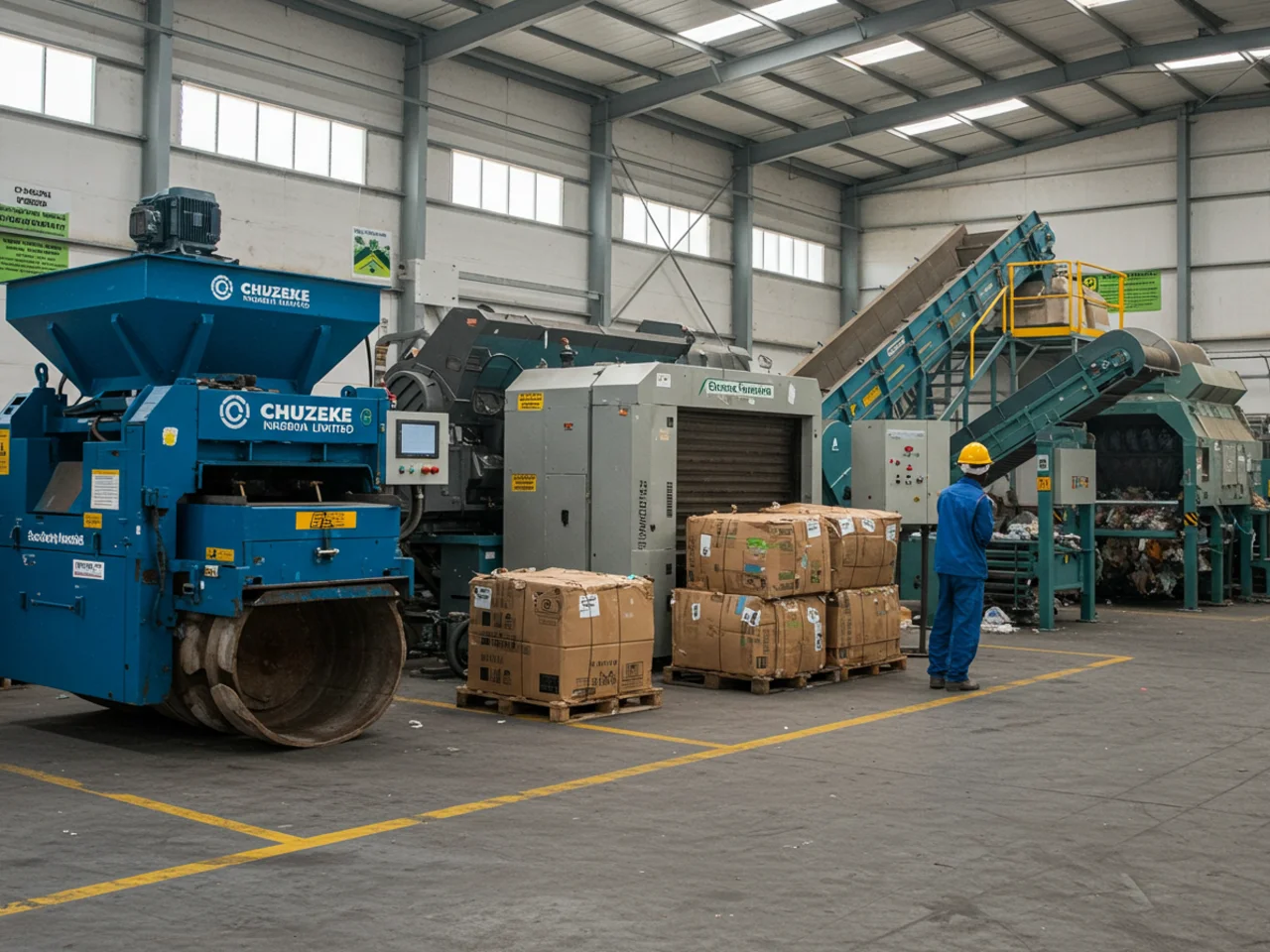
Hydraulic systems drive most compactors and balers. Check hydraulic oil levels, seals, and cylinder rods weekly. Shredder blades lose their edge under heavy loads; inspect cutting edges monthly and replace on schedule rather than waiting for performance to drop. Misaligned or dull blades force the motor to work harder, increasing wear across the entire drive system.
Team Training, Documentation, and Expert Support
Waste management equipment maintenance is only as good as the people carrying it out. Staff who understand the machines they operate catch early warning signs before they turn into expensive failures. Chuzeke Nigeria Limited’s industrial equipment training prepares your team to operate and maintain waste management equipment correctly and safely, covering both hands-on procedures and troubleshooting routines.
Document every maintenance action, no matter how minor. Name the technician, record the date, list parts used, and note any findings. This log serves as your maintenance history and supports warranty claims, insurance assessments, and NESREA compliance records.
When wear patterns or damage go beyond your team’s scope, bring in a fabrication expert. Chuzeke’s engineering team services equipment we fabricate and supports third-party machinery across Port Harcourt and throughout Nigeria. Early expert involvement prevents a manageable issue from becoming a full equipment replacement.
Ready to protect your equipment investment? Get in touch with Chuzeke Nigeria Limited for maintenance support and equipment servicing.
Frequently Asked Questions
How often should waste management equipment be serviced?
Service frequency depends on equipment type and daily operating hours. As a baseline, daily visual checks, weekly lubrication, monthly inspections, and annual overhauls cover most waste machinery. Adjust the schedule based on your actual run hours and Nigeria’s operating conditions: heat and humidity accelerate wear.
What causes waste management equipment to fail in Nigeria?
Skipped lubrication, blocked filters, and heat damage from continuous high-temperature operation are the leading causes. A regular inspection schedule catches these problems before they cause complete failure.
Can Chuzeke Nigeria Limited service equipment that they did not fabricate?
Yes. Chuzeke’s engineering team services a broad range of waste management machinery, including incinerators, compactors, thermal desorption units, and balers made by other manufacturers.
What is a CMMS, and do Nigerian facilities need one?
A Computerised Maintenance Management System (CMMS) is software that tracks maintenance schedules, logs repairs, and alerts technicians when service is due. Large facilities benefit most, but any operation running multiple machines can improve reliability using even a basic digital maintenance log.


Partner with Nigeria's Leading Waste Equipment Fabrication company
Stop dealing with equipment failures and project delays. Get reliable waste management and oil field equipment engineered for Nigerian industrial conditions. We’re ready to build.