

Pressure Vessel Fabrication in Nigeria: ASME Standards, Applications & How to Choose a Certified Fabricator
Pressure vessel fabrication sits at the center of oil and gas production, waste treatment, and process manufacturing. A pressure vessel holds gas or liquid at a pressure well above the surrounding air, and a poorly built one can injure workers and shut down a plant overnight. That is why every pressure vessel built or installed in Nigeria has to meet a recognized design code, usually the ASME Boiler and Pressure Vessel Code, alongside Nigeria’s own boiler and pressure vessel law.
Today, we will explain why that matters, what the code actually requires, where these vessels show up across Nigerian industry, and how to check that a metal fabricator can build one safely and legally.
What Is a Pressure Vessel?
A pressure vessel is any closed container built to hold gas or liquid at a pressure that differs from the air around it. Under the ASME code, a vessel counts as a pressure vessel once its internal or external pressure exceeds 15 pounds per square inch gauge, known as psig.
Below that line, most tanks fall outside the code’s scope entirely. Above it, design, material selection, welding, and testing all follow strict, documented rules. That single number decides whether a fabricator needs ASME certification for the job at all.
Why ASME Standards Govern Pressure Vessel Fabrication in Nigeria
Nigerian oil field operators, waste treatment plants, and process manufacturers overwhelmingly specify ASME compliance, not because it is a local law, but because insurers, lenders, and multinational partners will not accept anything less. The ASME Boiler and Pressure Vessel Code, or BPVC, sets the design and construction rules that most of the world builds to.
ASME Section VIII, Division 1, 2, and 3 Explained
ASME BPVC Section VIII is the part of the code dedicated to pressure vessels, and it splits into three divisions.
Division 1 covers most standard vessels operating above 15 psig. It uses a design-by-rule method with prescriptive formulas, which keeps engineering time and cost down. This is the division that covers the large majority of Nigerian oil field and process vessels.
Division 2 applies to vessels operating at higher pressure or performance requirements. It uses design-by-analysis, often involving finite element modeling, which allows thinner walls and lighter vessels but demands more engineering rigor and testing.
Division 3 covers extreme service, typically above 10,000 psi, and is rare outside specialized high-pressure processes.
For a Nigerian buyer, the practical question is simple: does the project need Division 1’s proven, cost-effective rules, or does the pressure and duty call for Division 2’s tighter tolerances? A qualified fabricator will tell you which one your application needs before quoting.
The U, U2, R, and S Stamps — What They Mean for Buyers
Once a vessel is designed to Section VIII, it still needs to be built by a shop that holds the matching ASME certification mark, commonly called a stamp.
- U stamp: for unfired pressure vessels built to Division 1. This covers most oil field separators, receivers, and process vessels.
- U2 stamp: for vessels built to Division 2, where higher pressure or stress analysis applies.
- R stamp: issued by the National Board of Boiler and Pressure Vessel Inspectors for repair and alteration of existing pressure equipment.
- S stamp: for power boilers and power piping.
To hold any of these, a fabricator needs a documented quality control system, a signed Accreditation and Certification Agreement, and a working relationship with an Authorized Inspection Agency, whose inspector reviews the design calculations and witnesses the hydrostatic test before the vessel ships.
Every certified vessel leaves the shop with a U-1 data report signed by that inspector. If a fabricator cannot produce one, the vessel is not properly certified, no matter what the sales sheet says.
Nigeria’s Regulatory Framework for Boilers and Pressure Vessels
ASME sets the engineering standard, but Nigeria also has its own statutory layer that applies regardless of which code the vessel was designed to.
The Boiler and Pressure Vessel Regulations, 2018
Nigeria’s Federal Ministry of Labour and Employment made the Boiler and Pressure Vessel Regulations in 2018 under Section 49 of the Factories Act. The regulation covers the safety of anyone involved in the manufacture, fabrication, installation, inspection, use, or maintenance of steam boilers, steam receivers, other pressure vessels, refrigeration plants, or connected piping at a Nigerian workplace.
In practice, this means a pressure vessel operating in Nigeria needs both an internationally recognized design certification, usually ASME, and compliance with this domestic safety regulation before it can be legally installed and inspected.
NUPRC Compliance for Upstream Oil and Gas Pressure Equipment
Pressure vessels used in exploration and production fall under the Nigerian Upstream Petroleum Regulatory Commission (NUPRC). Operators typically require ASME-designed vessels with documentation packages built around NUPRC’s inspection and permitting process, plus NACE-compliant materials where sour gas or produced fluids are involved.
NCDMB and Local Content Rules for Fabrication and Welding
Fabrication and welding are two of the activities with the strictest local content requirements in Nigerian oil and gas. Under the Nigerian Oil and Gas Industry Content Development Act and the Nigerian Content Development and Monitoring Board’s guidelines, operators must prioritize Nigerian-manufactured goods and locally executed fabrication and welding wherever local capability exists and meets the required standard.
For a buyer, that turns local sourcing from a nice-to-have into a compliance requirement for many upstream contracts, and it is one more reason a Port Harcourt-based, ASME-certified fabricator is often the more defensible choice over an imported vessel.
Common Applications of Pressure Vessels in Nigerian Industry
Oil and Gas: Separators, Knockout Drums, and Scrubbers
Most upstream pressure vessels in Nigeria do one job: separate produced fluids into oil, gas, and water before they move further down the process line.
Two-phase and three-phase separators handle this at the wellhead or manifold. Knockout drums sit ahead of compressors and flare systems to strip liquid carryover out of a gas stream and protect downstream equipment. Scrubbers do similar work on fuel gas and flare gas lines.
All of these are built to Section VIII, with sour-service grades specified wherever hydrogen sulfide is present in the produced fluid.
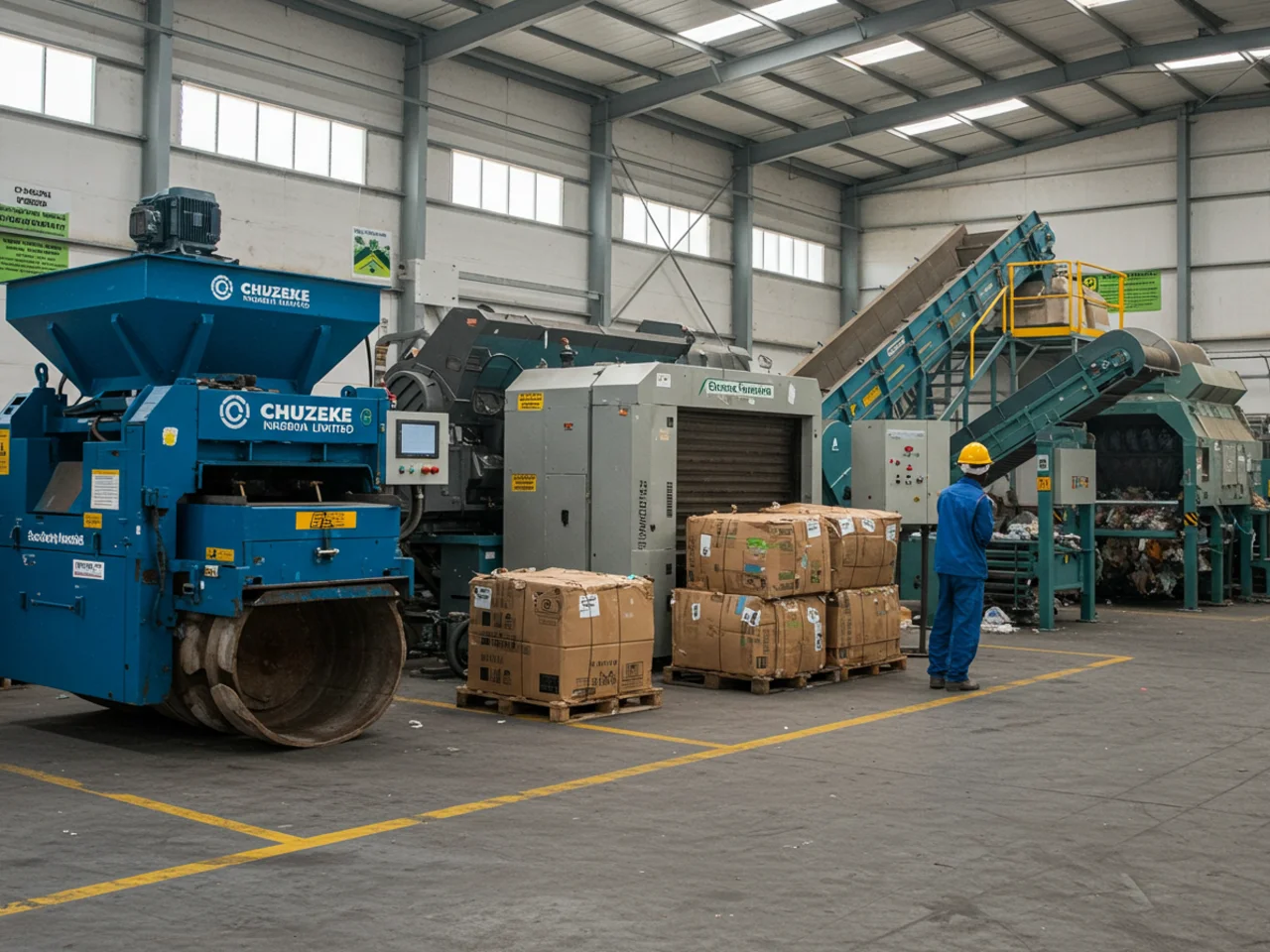
Chuzeke Nigeria Limited fabricates oil field equipment built for Nigerian conditions.
Waste Management: Pyrolysis Reactors, Thermal Desorption Chambers, and Autoclave Sterilizers
Pressure vessel principles extend directly into waste treatment equipment. A pyrolysis reactor and a thermal desorption chamber both operate as sealed, pressure-rated vessels that heat waste material under controlled conditions to separate hydrocarbons, moisture, and contaminants.
Chuzeke’s own 5 ton/h sludge thermal desorption unit works on exactly this basis: a contained vessel using indirect heating to recover usable oil from oily sludge while safely discharging the solid by-product.
Medical waste autoclaves follow the same pressure-vessel logic on the sterilization side, using pressurized steam to neutralize biohazardous material before disposal. This is a direct link between pressure vessel fabrication skill and Chuzeke’s core waste management equipment line.
Water Treatment, Power, and General Process Industries
Beyond oil and gas, pressure vessels turn up as water treatment filter and softener vessels, deaerators that strip dissolved gases from feedwater, boilers for steam generation, and storage or reaction vessels across food processing and chemical plants. Anywhere a process needs to hold liquid or gas above atmospheric pressure, a properly certified vessel is doing the work quietly in the background.
How to Choose a Certified Pressure Vessel Fabricator in Nigeria
Verify the ASME Certificate of Authorization
Ask to see the fabricator’s current certificate, not a claim on a website. Check that the name and address on the certificate match the shop you are dealing with, and confirm the certification has not expired. An outdated or mismatched certificate makes the document invalid.
Check Welder and NDT Qualifications
Every welder working on a Section VIII vessel needs to be qualified to ASME Section IX procedures, with records the fabricator should hand over on request. Non-destructive testing, such as radiography or ultrasonic testing, needs to be performed by qualified technicians against the vessel’s design requirements, not skipped to save time.
Review the Documentation Package
A properly built vessel ships with a complete paper trail: the U-1 data report, material test reports or mill certificates tracing every plate and fitting back to its source, welding procedure records, and hydrostatic test results. If a fabricator cannot produce this package, do not accept the vessel, regardless of how it looks.
Confirm Local Fabrication Capacity and After-Sales Support
A site visit tells you more than a brochure. Look at the workshop, the welding bays, and the quality control process in person. Then ask about maintenance and spare parts support after delivery.
A local, Port Harcourt-based fabricator can turn around inspections, repairs, and re-certification far faster than waiting on an overseas supplier, and it keeps the project within Nigeria’s local content requirements from day one.
Why Fabricate Locally: The Case for Nigerian-Built Pressure Vessels
Importing a pressure vessel adds shipping time, currency exposure, and a support gap the moment something needs adjusting on site. Local fabrication under ASME certification removes all three, while satisfying the fabrication and welding local content rules that many upstream contracts now require outright.
It also means the vessel is built with coatings and material choices suited to Nigeria’s heat, humidity, and coastal corrosion from the start, not adapted after the fact.
Frequently Asked Questions
What pressure counts as a “pressure vessel” under ASME?
Any vessel operating above 15 psig, internal or external, falls under ASME Section VIII.
Is ASME certification legally required in Nigeria?
ASME itself is not Nigerian law, but Nigeria’s Boiler and Pressure Vessel Regulations, 2018 govern the safety of pressure equipment locally, and most operators, insurers, and lenders require ASME certification as the accepted design standard on top of that.
What is the difference between a U stamp and a U2 stamp?
A U stamp certifies a vessel built to ASME Section VIII Division 1. A U2 stamp certifies a vessel built to the more detailed Division 2 rules, typically for higher-pressure or higher-performance service.
How long does pressure vessel fabrication take in Nigeria?
Timelines depend on vessel size, division, and documentation requirements, but working with a local, ASME-certified fabricator generally cuts weeks off the lead time compared with importing a built vessel.
Get an ASME-Compliant Pressure Vessel Built in Port Harcourt
Chuzeke Nigeria Limited fabricates ASME-standard pressure vessels for oilfield and process applications from its Port Harcourt facility, with a complete documentation package for every unit. Get a project quote or explore the full range of custom steel fabrication services.
You Might Also Like


Partner with Nigeria's Leading Metal Fabrication services company
Stop dealing with equipment failures and project delays. Get reliable waste management and oil field equipment engineered for Nigerian industrial conditions. We’re ready to build.