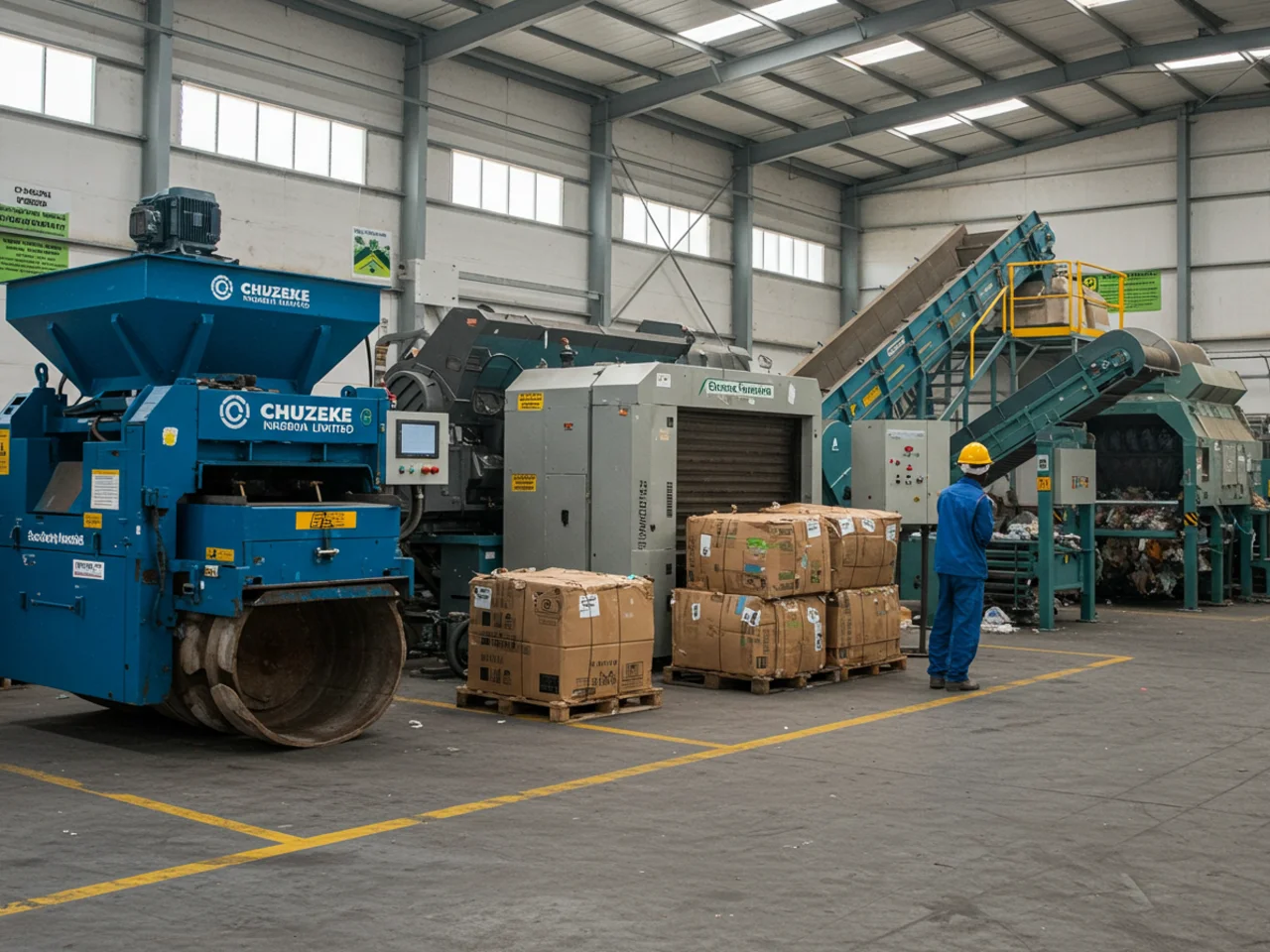
Industrial waste compactors in Nigeria are among the most cost-effective equipment investments a plant manager, procurement officer, or site engineer can make. Whether you run a manufacturing facility in Port Harcourt, an oil field operation in the Niger Delta, or a healthcare institution in Lagos, waste accumulates faster than most storage systems can handle. A properly specified waste compactor reduces your disposal trips by up to 90 percent, lowers hauling costs, and keeps your site compliant with NESREA’s National Environmental (Sanitation and Wastes Control) Regulations, 2009.
This article covers the four main types of industrial waste compactors available in Nigeria, what capacity numbers actually mean, and the four questions that should shape your purchasing decision.
What Is an Industrial Waste Compactor?
An industrial waste compactor is a machine that applies hydraulic or mechanical pressure to crush and compress solid waste materials into a fraction of their original volume.
A standard 200-litre skip bin fills within hours on a busy production floor. The same floor, fitted with a waste compactor, may produce one collection event per week instead of several per day. That difference in collection frequency is where the cost savings accumulate.
How Hydraulic Compaction Works
Most industrial compactors in Nigeria run on hydraulic systems. A motor-driven pump pushes pressurized hydraulic fluid into a cylinder, which drives a heavy steel ram or press plate against the waste in the compaction chamber. The ram applies force measured in tons, pressing waste against the chamber walls until it reaches the smallest achievable volume. After compaction, the ram retracts, and the cycle repeats.
Force ratings for industrial models range from 20 tons for light-duty cardboard compactors to 200 tons for heavy-duty drum crushers used in oil and gas operations.
Why Nigerian Industries Need Dedicated Waste Compactors
Nigeria’s industrial waste volumes are high and rising. The oil and gas sector alone generates millions of used 200-litre drums, chemical containers, and PPE materials each year. Manufacturing plants in Lagos, Kano, and Port Harcourt produce large quantities of packaging waste, scrap off-cuts, and process by-products daily.
Without a compactor, this waste occupies floor space, increases fire risk, attracts NESREA enforcement, and drives up haulage costs with every additional collection trip.
NESREA fines for non-compliant waste handling range from ₦500,000 to ₦10,000,000 per violation. A properly enclosed and operated compactor removes the waste storage risk that draws those fines.
Types of Industrial Waste Compactors Available in Nigeria
Here is a breakdown of the four main compactor types, what each one does, and which Nigerian industries use them most:
Drum Compactors and Barrel Crushers
A drum compactor, also called a barrel crusher or drum press, uses a vertical hydraulic ram to flatten used metal drums from above. The machine compresses a standard 200-litre steel drum into a flat disc, achieving up to a 10:1 volume reduction. Ten full-size drums become the equivalent of one in storage space.
This is the most requested compactor type in Nigeria’s oil and gas sector. Used drums accumulate rapidly on onshore and offshore production sites across the Niger Delta. The Environmental Guidelines and Standards for the Petroleum Industry in Nigeria (EGASPIN), issued by NUPRC, require that used containers and drums be properly managed and rendered incapable of reuse before disposal. Drum compaction satisfies this requirement.
The image below shows a Chuzeke Nigeria Limited drum barrel compactor in active operation at our Port Harcourt facility. The hydraulic press plate is driving down through two stacked 200-litre drums, demonstrating the enclosed chamber, heavy-gauge steel construction, and side-access panels that allow safe drum insertion and removal.

Stationary Hydraulic Waste Compactors
Stationary compactors bolt to a concrete pad and compress waste directly into a detachable skip or container. They handle dry industrial waste at sustained volumes, making them the standard choice for manufacturing plants, printing facilities, distribution centers, and packaging operations.
Compaction ratios range from 4:1 to 8:1, depending on material density. The container is removed by a collection truck when full, and a fresh container is swapped in.
Self-Contained Waste Compactors
Self-contained compactors combine the compaction unit and the waste collection container into a single sealed, liquid-tight system.
Because no leaks or drainage occur, these units suit operations that produce wet or organic waste, such as food processing plants, hospital kitchens, abattoirs, and catering operations. Self-contained models can hold up to 160 cubic yards of compacted waste before requiring collection.
Vertical Waste Compactors
Vertical compactors compress waste downward into a standard skip or dumpster. They have a smaller footprint than stationary units and suit facilities with limited external space: petrol stations, hotels, urban office complexes, and small-to-medium retail outlets. They handle both wet and dry waste, making them a flexible choice for mixed-use commercial sites.
Not sure which type fits your operation? Contact Chuzeke Nigeria Limited for a free assessment. Our engineering team reviews your waste stream and site layout before recommending a compactor type. Visit our waste management equipment page.
Industrial Waste Compactor Capacity: Reading the Numbers
Every compactor specification sheet lists two numbers that matter: the volume reduction ratio and the compaction force rating. Here is what each one means and why both matter for a Nigerian buyer.
Volume Reduction Ratios Explained
Volume reduction ratio describes how much smaller compacted waste is compared to its original loose form. A 5:1 ratio means five cubic meters of loose waste becomes one cubic meter after compaction. A 10:1 ratio halves that further. For facilities that pay for waste collection by the load or by cubic meter, a 10:1 reduction cuts collection costs by up to 90 percent compared to non-compacted disposal.
Most hydraulic waste compactors achieve ratios between 4:1 and 10:1. The actual ratio depends on material density, the size of the compaction chamber, and the ram force applied. Dense materials like steel drums achieve the highest ratios. Light materials like foam or loosely packed paper achieve lower ratios.
Compaction Force Ratings: 50 to 200 Tons
Compaction force tells you how much pressure the ram can apply. Drum crushers and barrel presses require high force, typically 50 tons or more, to flatten 200-litre steel drums reliably and safely. General solid-waste compactors for dry materials like cardboard or plastic typically operate at 20 to 50 tons. Self-contained compactors for wet waste often fall in the 25-to-40-ton range.
Chuzeke Nigeria Limited fabricates waste compactors with force ratings from 50 to 200 tons. Higher force ratings suit operations that process mixed waste streams, including dense or bulky materials that lighter machines cannot handle consistently.
Matching Compactor Capacity to Your Waste Stream
Start with two measurements: the type of waste you generate most and your daily waste volume in cubic meters or number of drums or bins. Then match the compactor size to that number.
A site producing 20 used 200-litre drums per week needs a drum crusher rated for continuous operation, not a light-duty cardboard compactor. A food processing plant producing two cubic meters of organic waste per day needs a liquid-tight self-contained unit, not an open stationary compactor.
Over-spec is expensive. Under-spec is a maintenance problem. Getting the capacity right the first time saves money on both ends.
How to Choose an Industrial Waste Compactor in Nigeria
Four questions separate a good compactor purchase from a frustrating one in the Nigerian industrial market. Here’s what you should do:
Step 1 — Identify Your Waste Type and Daily Volume
Steel drums require a hydraulic drum crusher with a certified force rating. Mixed dry solid waste such as cardboard, plastics, and off-cuts suits a stationary compactor. Wet organic waste needs a liquid-tight self-contained model. Mixed commercial waste in limited space suits a vertical unit.
Once you know your waste type, measure your daily output. Count bins, drums, or skips filled per day. Use that number to size the compaction chamber and cycle frequency.
Step 2 — Account for Nigerian Operating Conditions
Standard imported compactors are rated for European or North American conditions. Nigeria’s ambient temperatures routinely exceed 35°C in the Niger Delta and other industrial zones. Elevated heat changes hydraulic fluid viscosity, reduces ram pressure, and accelerates seal degradation.
Coastal humidity in cities like Port Harcourt, Warri, and Bonny causes corrosion in exposed steel components within months if the machine is not built with appropriate coatings and material grades.
Nigeria’s power supply adds another factor. Machines must tolerate rough starts, power interruptions mid-cycle, and voltage fluctuations without damaging the hydraulic cylinder or control panel. Look for compactors built with motor protection switches, soft-start capabilities, and cycle-resume functions.
Equipment fabricated in Nigeria for Nigerian conditions addresses these factors by design, not by specification override.
Step 3 — Confirm NESREA Compliance Requirements
The National Environmental (Sanitation and Wastes Control) Regulations, 2009, enforced by NESREA, require that industrial waste be stored, handled, and transported in a manner that prevents contamination of land, water, and air. An enclosed, liquid-tight compactor with a sealed chamber meets this requirement. An open-top press or a leaking self-contained unit does not.
For oil and gas operations, EGASPIN requires that used drums be rendered incapable of reuse before disposal. A drum crusher meets this requirement and provides a compact, documented waste form that NUPRC inspectors can verify.
Step 4 — Decide Between Local Fabrication and Imported Units
Imported compactors carry three costs that Nigerian buyers often underestimate: import duties, long lead times, and the absence of local spare parts.
When a hydraulic seal fails on a machine sourced from Europe or North America, the replacement part may take four to eight weeks to arrive. That is four to eight weeks of compacted waste with nowhere to go, or unplanned collection costs.
A locally fabricated compactor from a Port Harcourt manufacturer means engineering support is a phone call away. Parts are cut and fitted on the same bench where the machine was built. Maintenance does not depend on international logistics.
See our complete guide to the best waste management equipment for Nigerian industries before you decide.
Chuzeke Nigeria Limited: Custom-Fabricated Waste Compactors Built for Nigeria
Chuzeke Nigeria Limited is Nigeria’s leading waste management equipment fabricator, operating from Port Harcourt in Rivers State. We fabricate hydraulic waste compactors, drum crushers, stationary compactors, and complete waste handling systems for industries across Nigeria. Our compactors deliver up to 10:1 volume reduction with force ratings from 50 to 200 tons, built for continuous operation in Nigerian industrial environments.
Drum Barrel Compactor for Oil and Gas Operations
The Chuzeke drum barrel compactor is a vertical hydraulic press designed for crushing standard 200-litre steel drums generated by oil and gas, chemical, and manufacturing operations. The machine features a reinforced steel frame, a fully enclosed compaction chamber with side-access panels, and a hydraulic system rated for continuous daily operation in high-temperature, high-humidity environments.
The unit shown in our facility photo above is actively crushing two stacked used steel drums, demonstrating the press plate travel depth and enclosed chamber that prevents drum fragments from escaping during the crushing cycle. This unit has been fabricated at our Port Harcourt workshop and deployed to oil and gas operations in the Niger Delta region.
Specifications and Fabrication Standards
- Force rating: 50 to 200 tons (configurable to application)
- Volume reduction: up to 10:1
- Construction: heavy-gauge certified steel, corrosion-resistant finish
- Operation: continuous cycle, single-phase or three-phase power options
- Standards: NESREA-compliant; fabricated to ASME and ISO quality management standards
- Support: on-site installation, operator training, and local maintenance from Port Harcourt
Every compactor we fabricate receives a site assessment first. Our engineering team reviews your waste stream, daily volumes, site layout, and power supply before confirming a specification. You receive a machine built for your exact operation, not a catalogue unit modified to fit.
To get a site assessment and a custom compactor proposal, contact Chuzeke Nigeria Limited today. Our fabrication team is ready to build.
Frequently Asked Questions About Industrial Waste Compactors in Nigeria
What is the most common type of industrial waste compactor used in Nigeria?
Drum compactors are the most requested type in Nigeria’s oil and gas sector due to the high volume of used 200-litre drums generated on production sites. Stationary hydraulic compactors are the most common type for manufacturing and distribution facilities. Chuzeke Nigeria Limited fabricates both types for Nigerian operations.
What volume reduction ratio should I expect from a hydraulic waste compactor in Nigeria?
Most hydraulic waste compactors achieve a volume reduction ratio of 4:1 to 10:1, depending on material type, chamber size, and ram force applied. Chuzeke’s hydraulic drum compactors deliver up to 10:1 reduction, converting ten units of loose drum waste into the equivalent of one.
Does a waste compactor need NESREA approval in Nigeria?
NESREA compliance applies to your waste handling operation as a whole under the National Environmental (Sanitation and Wastes Control) Regulations, 2009. Using a properly enclosed, leak-free compactor helps your facility meet NESREA’s waste containment and handling standards and substantially reduces enforcement risk. For petroleum sector operations, EGASPIN compliance also applies to drum disposal.
How long does it take to fabricate a custom industrial waste compactor in Nigeria?
Fabrication timelines at Chuzeke Nigeria Limited depend on compactor type and specification. Standard drum compactors typically take two to four weeks from design approval to delivery and installation. Complex stationary or self-contained systems may require six to eight weeks.
Can Chuzeke Nigeria Limited service compactors already installed on-site?
Yes. Our engineering team provides installation, operator training, and maintenance support for all equipment we fabricate. We also assess and service existing compactors from other suppliers where spare parts are locally available.