

Circular Economy in Nigeria: How Waste Is Becoming Africa’s Biggest Business Opportunity
Circular economy in Nigeria is no longer a talking point buried in a government report. It has turned into one of the most active investment stories in Africa’s waste sector. Nigeria generates about 32 million tonnes of solid waste every year, a number the World Bank expects to almost triple to 107 million tonnes by 2050. Only about 30% of that waste is collected and properly processed today.
Every uncollected tonne represents an unclaimed resource, and a growing group of investors, regulators, and local fabricators now treat that gap as Nigeria’s next major business frontier.
What a Circular Economy Actually Means for Nigerian Businesses
A circular economy replaces the old “take, make, dispose” model with one that keeps materials in use for as long as possible. Instead of extracting raw inputs, manufacturing products, and throwing them away, a circular system designs out waste from the start, keeps products and materials in circulation through reuse and recycling, and lets natural systems regenerate.
For a Nigerian business, that shift changes what waste actually is. Plastic sachets, scrap steel, used tires, and oil sludge stop being disposal problems and start being raw material for a second business line.
From Linear to Business Reality
NESREA has pushed this shift hard through 2026, telling facility operators that waste “should no longer be treated as an end product but as a resource.” Officials point to Extended Producer Responsibility (EPR) as the legal mechanism forcing that mindset onto manufacturers and importers across the country.
Why Nigeria’s Waste Problem Is Really an Investment Signal
Nigeria’s plastic waste alone tells the story. The country generates an estimated 2.5 million tonnes of plastic waste a year and ranks among the top 20 countries contributing to ocean-bound plastic pollution.
A UNIDO assessment of the sector puts it plainly: the large volume of waste Nigeria produces presents circular economic business opportunities across the plastic value chain that should be captured for job creation, small business growth, and foreign direct investment.
That framing extends well beyond plastic. Every waste stream Nigeria struggles to manage today, from e-waste to construction debris, is a supply chain waiting for a buyer.
The Numbers Behind Africa’s Circular Economy Boom
The scale of the opportunity is not a local guess. The African Development Bank places Africa’s circular economy opportunity at $546 billion a year by 2030, with the potential to create 11 million new jobs on a continent where only 3.1 million jobs open up annually against 10 million young job seekers.
Globally, Accenture has valued the full circular economy shift at $4.5 trillion. Nigeria sits at the center of Africa’s response. It co-founded the African Circular Economy Alliance alongside Rwanda and South Africa in 2017, and the Nigerian Investment Promotion Commission now lists the circular economy among the country’s most commercially promising investment frontiers, citing municipal, agricultural, industrial, electronic, and plastic waste as distinct opportunity areas for private capital.
Nigeria’s Regulatory Engine: NESREA, EPR, and the Policy Push
Regulation is what turns a waste opportunity into a bankable business. Nigeria adopted EPR as national policy in 2014 and gazetted a revised EPR Guidance document in 2020, defining collection and recycling targets for manufacturers.
The National Policy on Solid Waste Management built a 5Rs hierarchy of Reduction, Repair, Reuse and Recycle, and Recovery into how facilities must plan their waste operations, covered in more depth in our guide to solid waste management in Nigeria.
A federal ban on single-use plastics in government buildings and transport hubs took effect in August 2024, and NESREA now requires industrial facilities to fully adopt circular economy principles as a condition of environmental compliance. Businesses handling hazardous or regulated waste streams should also review the legal framework for hazardous waste management in Nigeria before scaling operations.
Where the Money Is: Nigeria’s Highest-Opportunity Waste Streams
Plastics and Packaging
Plastic recycling and pelletizing already draw private investment in Lagos and Port Harcourt, feeding manufacturers who need recovered feedstock instead of virgin resin.
Electronic Waste
E-waste recovery captures valuable metals from discarded devices, a stream we cover in detail in our e-waste management guide for Nigeria.
Oil Field and Industrial Sludge
The Niger Delta’s oil and gas operations generate sludge that thermal desorption and treatment systems can turn into recovered oil and safely discharged solids, as explained in our breakdown of oil sludge treatment methods in the Niger Delta.
Organic and Agricultural Residue
Composting and anaerobic digestion convert food and farm waste into soil amendments and biogas, a fast-growing niche as urban centers look for landfill alternatives.
The Waste Equipment That Turns Waste Streams Into Revenue
None of these opportunities convert into revenue without the right processing equipment.
Pyrolysis plants break down plastic and tire waste into fuel oil and carbon black, covered in our guide to pyrolysis plants in Nigeria.
Rotary kiln incinerators handle hazardous and medical waste streams that cannot go to landfill, detailed in our rotary kiln incinerator guide.
Compactors and balers cut transport and storage costs for recyclable materials, explored in our industrial waste compactor guide.
Businesses evaluating which systems fit their waste stream can review our full range of waste management equipment built for Nigerian operating conditions.
Financing the Shift: Green Bonds, Carbon Credits, and Private Capital
Waste equipment is only half the investment case. Waste-to-energy and recycling projects increasingly draw on carbon credits and green bond financing to close funding gaps, a route we map out in our guide to carbon credits and green bonds for waste-to-energy projects in Nigeria.
Why Local Fabrication Is Nigeria’s Circular Economy Advantage
Imported waste processing equipment carries duties, long shipping timelines, and limited local support once it breaks down in Nigeria’s heat and humidity.
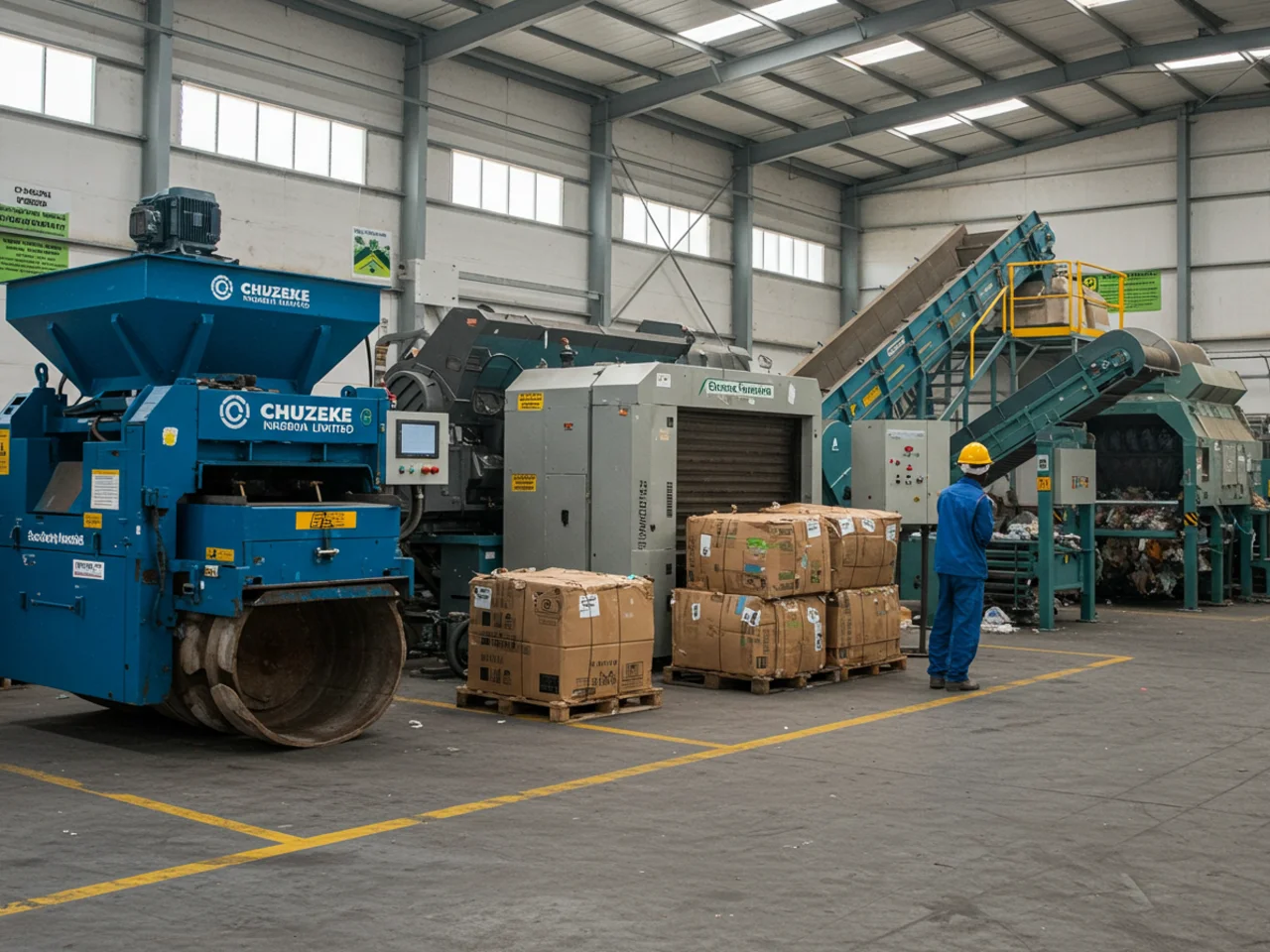
Chuzeke Nigeria Limited fabricates rotary kiln incinerators, pyrolysis plants, compactors, and thermal desorption units from its Port Harcourt facility, including a 5 ton/h sludge thermal desorption unit built for continuous oily sludge treatment. That proximity to the Niger Delta’s industrial base means faster delivery, direct access to quality steel, and equipment engineered for local conditions rather than adapted from a foreign catalogue.
Frequently Asked Questions
Is Nigeria really building a circular economy?
Yes. NESREA has intensified enforcement of Extended Producer Responsibility and circular economy compliance through 2026, and Nigeria co-founded the African Circular Economy Alliance in 2017.
What waste streams offer the biggest business opportunity in Nigeria?
Plastics, e-waste, industrial and oil field sludge, and organic waste currently offer the clearest paths to revenue, backed by growing regulatory and financing support.
Does NESREA regulate circular economy businesses?
Yes. NESREA enforces EPR guidelines, plastic waste regulations, and facility-level circular economy compliance across Nigerian industries.
How can a business get started in Nigeria’s circular economy?
Start with the waste stream you understand best, confirm the regulatory requirements that apply to it, then source processing equipment built for Nigerian operating conditions rather than repurposed imports.
Nigeria’s waste problem will not solve itself, but it is already funding the businesses that show up to solve it. Talk to Chuzeke Nigeria Limited about fabricating the waste equipment your circular economy venture needs.


Partner with Nigeria's Leading Waste Equipment Fabrication company
Stop dealing with equipment failures and project delays. Get reliable waste management and oil field equipment engineered for Nigerian industrial conditions. We’re ready to build.