

Carbon Credits and Green Bonds: How to Fund Waste-to-Energy Projects in Nigeria
Carbon credits for waste management in Nigeria and sovereign green bonds now represent two of the most structured and lucrative pathways available for project developers who want to close the funding gap on industrial waste-to-energy (WtE) facilities. If you are an energy entrepreneur, a municipal planner, or a corporate environmental investor, this article breaks down exactly how to access both instruments and build a project that attracts international capital.
The Financing Void Facing Nigeria’s Waste-to-Energy Sector
Climate financing in Nigeria requires a scale that no single institution can fill. Nigeria’s Energy Transition Plan requires over $1.9 trillion to reach net-zero by 2060, with analysts at Mondaq placing the annual renewable energy financing gap at $10 billion to $27.2 billion.
Meanwhile, municipal budgets are already under severe pressure just managing basic collection. The FCT Administration spends approximately ₦8 billion every year across the Federal Capital City and satellite towns, split between the Abuja Environmental Protection Board (₦6 billion) and the Satellite Towns Development Department (₦2 billion). A BudgIT report presented in Abuja in February 2026 confirmed that Nigeria receives roughly $4.93 billion in climate finance disbursements annually against an estimated need of $17.7 billion per year, a shortfall of at least $7 billion.
Here is the takeaway: public budgets can fund waste collection. They cannot fund the multi-billion-naira capital expenditure required to build, commission, and operate industrial WtE infrastructure. That financing must come from structured capital markets.
Why Municipal Budgets Cannot Close the Gap Alone
A rotary kiln incinerator or pyrolysis plant at an industrial scale carries a capital cost far above typical government procurement cycles. The FCT’s ₦7.3 billion 2026 waste collection contracts illustrate that government contracts are allocated to logistics and collection, not to equipment fabrication or WtE infrastructure. Project developers need blended finance strategies that stack green bond proceeds, carbon credit revenues, and private equity.
Nigeria’s Sovereign Green Bond Programme: What Project Developers Need to Know
Green bonds for renewable energy in Nigeria have matured from a niche instrument into a mainstream government financing tool.
The Federal Government issued Africa’s first sovereign green bond in December 2017. By 2025, the Series II bond attracted 220% oversubscription, raising ₦32.93 billion.
Series III Bond and the Upcoming N500 Billion Issuance
The Series III ₦47.335 billion Sovereign Green Bond was listed on both NGX and FMDQ Securities Exchange on May 13, 2026, carrying an 18.95% interest rate and maturing in June 2030. The preceding ₦50 billion bond issued in 2025 attracted ₦91 billion in total subscriptions, a clear sign of investor appetite.
Looking ahead, the Minister of Environment, Mr Balarabe Abbas Lawal, confirmed plans at the Abu Dhabi Sustainability Week to raise ₦1.5 trillion through green bond issuances in 2026. Proceeds are directed at climate change mitigation, renewable energy, sustainable infrastructure, and environmental protection.
Which Project Types Qualify for Green Bond Proceeds?
The Federal Government channels proceeds toward projects with measurable environmental outcomes. Eligible categories include renewable energy, clean transportation, water management, and climate adaptation. Waste-to-energy projects that demonstrate verified emissions reductions and community benefit fit squarely within the eligible use-of-proceeds categories defined by the Debt Management Office.
Monetizing Emissions: How Nigeria’s Carbon Market Works for WtE Operators
Funding for waste recycling plants in Africa increasingly comes from carbon credit revenues stacked on top of primary financing. Here is why this matters for WtE project developers.
The National Carbon Market Framework (NCMF) Explained
President Bola Tinubu approved Nigeria’s National Carbon Market Framework (NCMF) in October 2025, just ahead of COP30. The framework establishes the rules for generating, validating, and trading carbon credits domestically and internationally. Nigeria’s Carbon Market Activation Policy (NCMAP) targets at least $2.5 billion in high-integrity carbon credit investments by 2030. The policy explicitly references alignment with the ICROA Code of Best Practices and the Integrity Council for the Voluntary Carbon Market (ICVCM) Core Carbon Principles.
Releaf Earth in Cross River State: A Blueprint for Carbon Credit Generation
The clearest proof-of-concept for Nigerian operators comes from Releaf Earth, which launched Nigeria’s first industrial biochar production facility in Iwuru, Cross River State. The company converts agricultural waste, primarily palm kernel shells, into biochar through pyrolysis: a process that heats biomass in a low-oxygen environment. This transforms carbon-rich material into a chemically inert, solid form that resists decay for centuries, locking carbon out of the atmosphere.
Releaf Earth issued 190 tonnes of verified carbon dioxide equivalent (CO₂e) credits through the Rainbow Standard, a data-first registry built on ICROA and ICVCM standards, with third-party verification through the Riverse Registry. The company targets 40,000–60,000 tonnes of CO₂e removal by 2030, with a long-term ambition to reach 100 kilotonnes.
Let’s break it down: if a biochar operator at a small pilot scale can generate verified carbon credits in Nigeria, a fully engineered WtE incinerator or gasifier running at an industrial scale, producing measurable avoided landfill methane and avoided open-burn emissions, can generate a continuous stream of credit revenue year over year.
Structuring a Bankable Waste-to-Energy Project
Meeting Additionality and Permanence Requirements
Global carbon registries like ICROA and the ICVCM require every project to demonstrate two non-negotiable principles before credits are issued:
Additionality: Your emissions reductions must go beyond business-as-usual. An incinerator replacing open dumping or uncontrolled burning in a context where such controls would not otherwise have existed passes this test clearly. You must document the baseline scenario and show that your project could not have proceeded without the carbon credit revenue.
Permanence: The emissions reduction must be long-lasting and not reversed. A well-engineered WtE incinerator that thermally destroys waste rather than allowing it to decompose in a landfill, thereby preventing methane emissions over the years, meets this principle directly. Equipment design, operational controls, and third-party monitoring reports support the permanence claim in your Project Design Document (PDD).
Equipment Selection and Technical Compliance
Registry auditors review technical specifications when validating a project. The equipment you select must match the methodology’s assumptions. A gasifier or rotary kiln incinerator must operate under consistent thermal conditions, with stack emission monitoring and mass-balance reporting built into the design.
Chuzeke Nigeria Limited fabricates WtE equipment, including rotary kiln incinerators, pyrolysis plants, and gasifiers, at its Port Harcourt facility to ASME, ISO, and NESREA standards. Each unit is engineered for continuous, documented operation in Nigerian industrial conditions.
When your carbon registry auditor requests equipment specifications, operating logs, and emissions data, a Chuzeke-fabricated unit provides the technical paper trail that makes verification straightforward. Learn more about our waste management equipment fabrication capabilities or get in touch with our engineering team to discuss how your project’s equipment design can support carbon credit qualification from day one.
Frequently Asked Questions About Carbon Credits
What is the Nigeria Carbon Market Framework?
The National Carbon Market Framework (NCMF), approved by President Tinubu in October 2025, sets the rules for generating and trading carbon credits in Nigeria. It targets $2.5–$3 billion in annual carbon finance by 2030 and aligns with ICROA and ICVCM international standards.
Can a waste-to-energy incinerator earn carbon credits in Nigeria?
Yes. A WtE incinerator that demonstrably replaces open dumping or uncontrolled landfill disposal and is verified by an ICROA-aligned registry can generate tradeable carbon credits. The key conditions are additionality, permanence, and third-party verification through an approved methodology.
What is the sovereign green bond in Nigeria, and how do I access it?
Nigeria’s sovereign green bonds are issued by the Debt Management Office on behalf of the Federal Government and listed on NGX and FMDQ. Private project developers access green bond proceeds indirectly through banks and development finance institutions that on-lend from the proceeds pool for eligible climate projects. Watch Debt Management Office green bond portal announcements and engage with development finance intermediaries early.
What did Releaf Earth demonstrate about carbon credits in Nigeria?
Releaf Earth launched Nigeria’s first industrial biochar facility in Cross River State, issuing 190 tonnes of verified CO₂e removal credits through the Rainbow Standard and Riverse Registry. This proves that a Nigerian operator can meet international carbon credit standards and sell verified credits to global buyers.
Why should I choose Chuzeke Nigeria Limited for WtE equipment?
Chuzeke Nigeria Limited fabricates rotary kiln incinerators, pyrolysis plants, and gasifiers at its Port Harcourt facility to ASME, ISO, and NESREA standards. Equipment is engineered for Nigeria’s operating conditions, with documentation support that helps your project meet the technical thresholds required by carbon credit registries and green bond eligibility criteria.
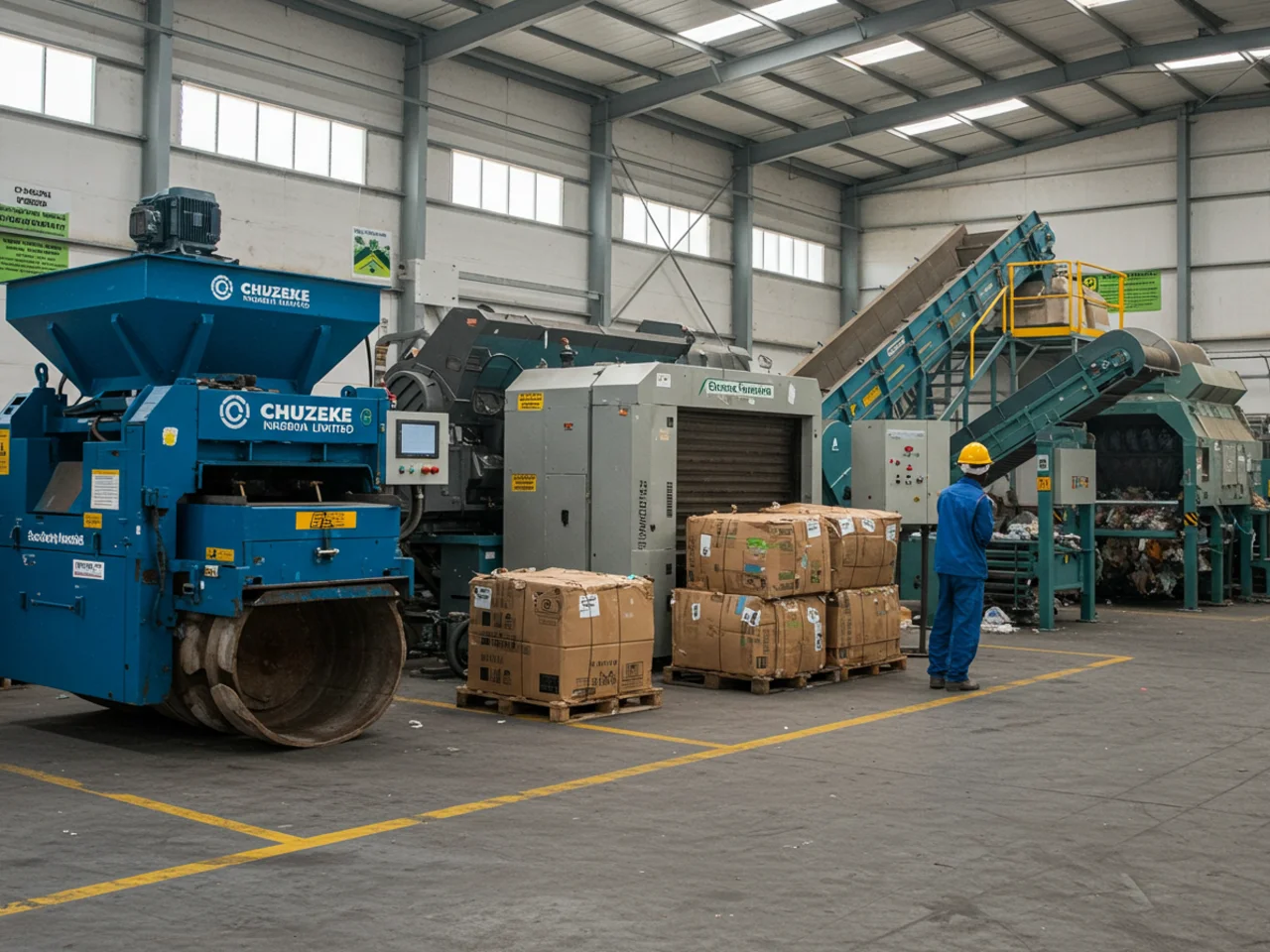


Partner with Nigeria's Leading Waste Equipment Fabrication company
Stop dealing with equipment failures and project delays. Get reliable waste management and oil field equipment engineered for Nigerian industrial conditions. We’re ready to build.