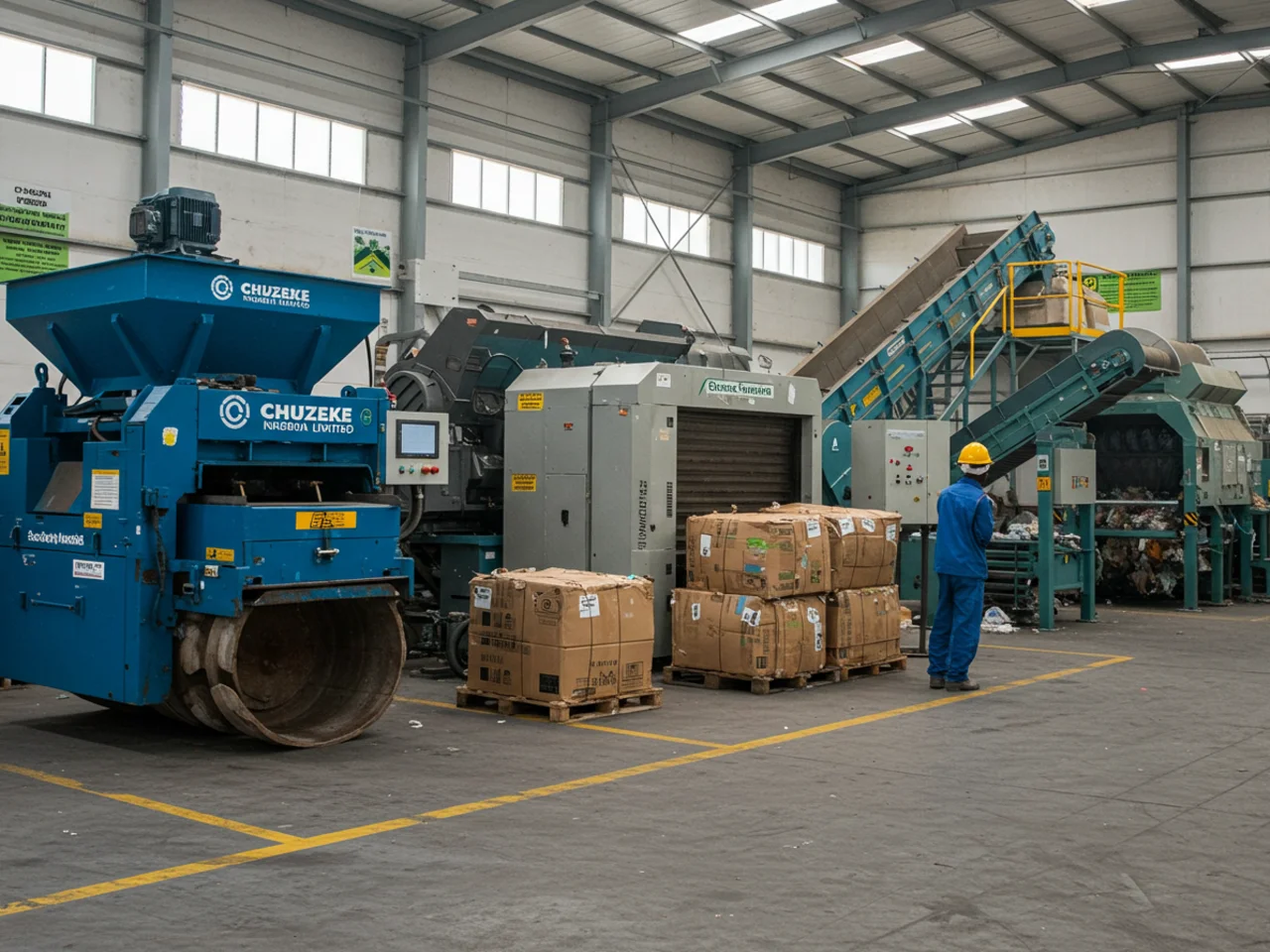
Gasifier incinerators in Nigeria let hospitals, oil and gas operators, hotels, and estates destroy waste on site under controlled conditions.
Chuzeke Nigeria Limited is a top waste management equipment manufacturer in Port Harcourt and across Nigeria, fabricating incinerators, thermal desorption units, drum compactors, and pyrolysis plants for industrial clients.
This waste equipment guide explains how waste gasification works, which specs to check before you buy, and where Nigerian industry uses these units.
In 2021, NESREA’s Director General said Nigeria generates more than 32 million tons of solid waste a year and collects only 20 to 30 percent. Waste that nobody collects ends up in dumps and open fires, and open burning is banned under Nigerian law.
What Is a Gasifier Incinerator?
A gasifier incinerator is a two-stage thermal treatment unit. The first chamber heats waste with a limited air supply, so the waste breaks down into combustible gas and ash instead of burning freely. The second chamber burns that gas at high temperature with extra air.
Larger waste-to-energy plants use the same gasification step to feed an engine or boiler. This guide covers the compact two-chamber version used for on-site disposal.

How Waste Gasification Works
Let’s break it down into three stages.
Stage 1: Drying and Pyrolysis in the Gasification Chamber
A burner heats the waste and removes moisture. At temperatures above 200 degrees Celsius with little oxygen, organic material decomposes into char and volatile gases. IEA Bioenergy Task 36 places pyrolysis at 250 to 700 degrees Celsius with no oxidising agent.
Stage 2: Gasification of the Waste
Controlled air enters the chamber. Part of the char and gas oxidises, which keeps the bed hot. The remaining carbon reacts with carbon dioxide and steam to form carbon monoxide and hydrogen, a mix called syngas. Gasification runs at 800 to 1,400 degrees Celsius with less air than full combustion needs.
Stage 3: Syngas Burnout in the Second Chamber
The syngas moves to the second chamber, where a burner and extra air finish combustion. The EU Industrial Emissions Directive (2010/75/EU), Article 50, a common design reference, requires gas to hold at least 850 degrees Celsius for two seconds, and 1,100 degrees Celsius for hazardous waste with more than 1 percent halogenated organic substances. Exhaust then passes through gas cleaning equipment sized to the waste type.
Gasifier Incinerator vs Conventional Incinerator
| Feature | Conventional incinerator | Gasifier incinerator |
|---|---|---|
| Air in the first chamber | Full combustion air | Limited air |
| Temperature range | 850 to 1,400 °C | 800 to 1,400 °C |
| First chamber output | Hot flue gas and ash | Syngas and ash |
| Energy recovery | Steam from hot flue gas | Syngas can fuel an engine or turbine |
Sources: IEA Bioenergy Task 36 (temperatures and air ratios) and the Global Syngas Technologies Council (syngas use).
Gasifier Incinerator Specs to Check Before You Buy
| Spec | Typical value |
|---|---|
| Capacity | 40 to 1,000 kg per hour in a published vendor range |
| Second chamber temperature | 850 °C for 2 seconds, 1,100 °C above 1% halogenated organics, units rated to 1,200 °C |
| Auxiliary burners | One per chamber, firing diesel, LPG or natural gas |
| Feed interlock | Automatic waste cut-off at start-up or low temperature |
| Ash quality | Organic carbon below 3% or loss on ignition below 5% |
| Loading | Batch or continuous, manual or automatic |
Moisture decides fuel use. Downdraft gasifiers need feed below 20 percent moisture, so wet sludge needs drying or thermal desorption first. Give your waste equipment fabricator a waste log with weights, moisture, and plastic content before sizing. Operators should record chamber temperatures at every load, which proves the unit holds its design temperature.
Which Waste Technology Fits Your Site?
Pick a gasifier incinerator for dry to moderately moist solid waste. Pick thermal desorption for oily sludge and drill cuttings, where the goal is to recover oil and clean the solids. Pick pyrolysis for clean plastic and tyre feed when you want oil or char as a product.
Chuzeke fabricates all three, so a site visit can settle the choice.
Industrial Applications of Gasifier Incinerators in Nigeria
Oil and Gas Waste in the Niger Delta
Oily rags, filters, contaminated packaging and camp waste from rigs and flow stations suit a gasifier incinerator. Liquid sludge goes through thermal desorption first. Chuzeke has fabricated a 5-ton-per-hour sludge thermal desorption unit.
Hospitals and Clinics
The National Environmental (Healthcare Waste Control) Regulations 2021 (S.I. 44 of 2021) cover waste generators, handlers and treatment facilities. An on-site gasifier incinerator keeps infectious waste off public roads.
Hotels, Estates, Ports and Markets
Packaging, paper, wood, textiles and plastics burn well in a gasifier incinerator. Chlorinated plastics raise acid gas loads, so the fabricator sizes gas cleaning for them.
Nigerian Rules That Shape Your Choice
The Bush/Forest Fire and Open Burning Regulations 2011 (S.I. 15 of 2011) ban open burning and fine companies up to ₦1,000,000 plus ₦20,000 for each day an offence continues.
RIWAMA, the Rivers State Waste Management Agency, was established by law in 2014. Confirm permit needs with NESREA and RIWAMA before installation, and use the RIWAMA compliance checklist for Port Harcourt businesses.
Why Choose Chuzeke for Gasifier Incinerators in Nigeria
Chuzeke Nigeria Limited designs and fabricates waste management equipment in Port Harcourt for clients across Nigeria. Send your waste type, daily tonnage and site layout, and the engineering team will size the unit. Request a quote for a gasifier incinerator from Chuzeke.
Gasifier Incinerator FAQs
What waste can a gasifier incinerator treat?
Dry mixed waste, medical waste, oily solids and packaging suit it. Wet sludge needs drying first.
How does gasification differ from pyrolysis?
Pyrolysis uses no oxidising agent at 250 to 700 °C. Gasification adds limited air at 800 to 1,400 °C.
Does the unit leave ash?
Yes. Ash leaves the first chamber and goes to approved disposal.
Is it legal to burn waste in Nigeria?
Only in permitted equipment. Open burning is banned.